

When I started coding with AI it was near hopeless. The models would make grammatical errors and, coding being brittle, the whole thing would fall apart. I almost gave up. Today, Anthropic’s Fable takes much of the strain — it does almost all my coding. What remains is the mid-level architecture: I need a vision for what I am trying to build, and some knowledge of the components that go into making it - vector stores, knowledge graphs, orchestrators, cloud deployments and so on. That role might be called an ‘architect’, or a ‘systems designer’ - something like that. I enjoy it, and have become fairly competent too.
But even this role is going - Fable can do much of it now, and in a year I imagine its successor will do most or all of it. I think the same is true of AI more broadly. Where we are now, the models can take on a lot of complexity and uncertainty in human affairs. And where we’re going they’ll do much more of it. A robotics revolution is about to begin that will put models squarely in the physical world and deep into our lives.
But there’s something that the bots will find far harder to oust us from. It’s an integral feature of what it means to be human. It relates to our choices, our creativity and our imagination.
It’s taste.
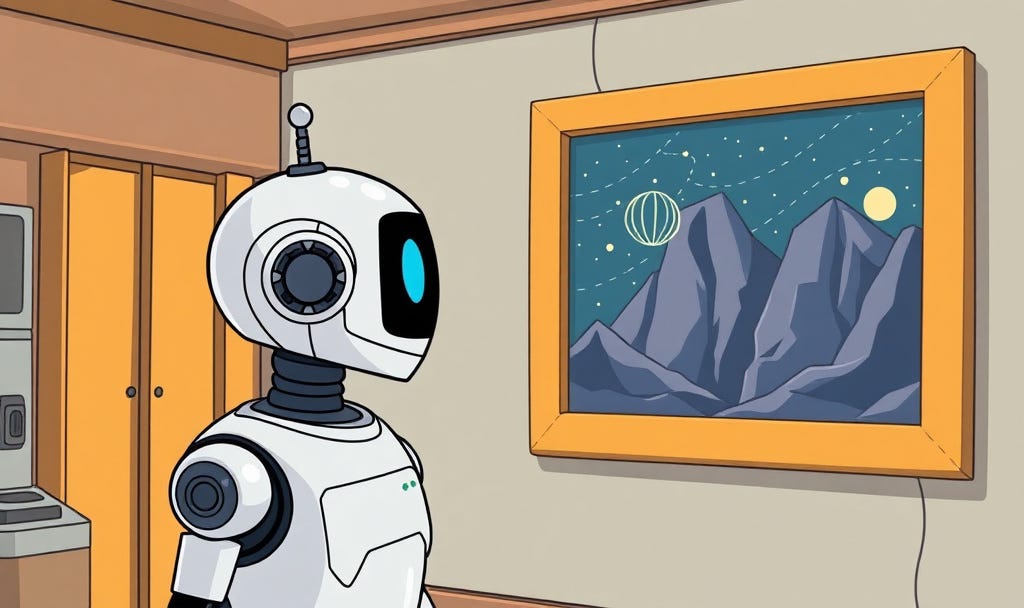
Taste is what shapes our decisions in great swathes of life. What do we like? How should we be? There’s just too much information and uncertainty to decide on a cost-benefit analysis. So taste does the work for us - it’s a filter. How? Taste appeals to our emotions. And as the neuroscientist Antonio Damasio found, patients with brain damage that impaired their emotions made lousy choices and took ages about it.
There’s a moral dimension to this too. We want our AI to ‘align’ with our choices, and to reflect our values. But ethics is aesthetic, says Nietzsche. I thought about his famous aphorism while saving a flagging bumble bee with a spoon of honey last week, only moments after dispatching a spider in the corner of my kitchen. What would my chatbot have chosen to do?
We shouldn’t flatter ourselves - our choices often aren’t matters of individual agency. After all, we’ve evolved to follow the crowd - jostling for status while not standing out too much. We are, when it comes to taste, dedicated followers of fashion, even if we don’t think so. And then there’s the taste that’s hardwired into us - why is the bee cute, and the spider revolting?
But still there is agency here. We are all engaged in a process of becoming - constructing our identities with which to face the world. Taste isn’t just about making efficient choices. It’s about creating ourselves. Even those avowedly slovenly are making a choice, signalling something about themselves through their self-expression; the absence of taste is itself a matter of taste.
So there’s a degree of existentialism to our aesthetic choices. It’s in the act of choosing, that we become. The machines don’t want to do that. They will develop social norms amongst themselves, and in their relations to us. And in striving for efficiency, they will surely form habits. But taste? Not really. Taste is, to some extent at least, a manifestation of will, consciousness and reflection. It’s human, done by humans and interpreted by humans. It’s integral in the material realities we create and the meaning we attach to them. Discernment is the essential winnower of creativity. There are many possible ideas, but the good ones are tasteful. And no improvements to Fable will automate that.